Insights From Our Experts
How women shaped brand authority and what it takes to earn trust today
There’s a certain kind of trust we learn without realizing it. It’s the everyday kind of trust, the kind that pops up when you’re feeling overwhelmed, unsure, or trying to do something for the first time and you just want so badly for someone to tell you exactly what you should do next.
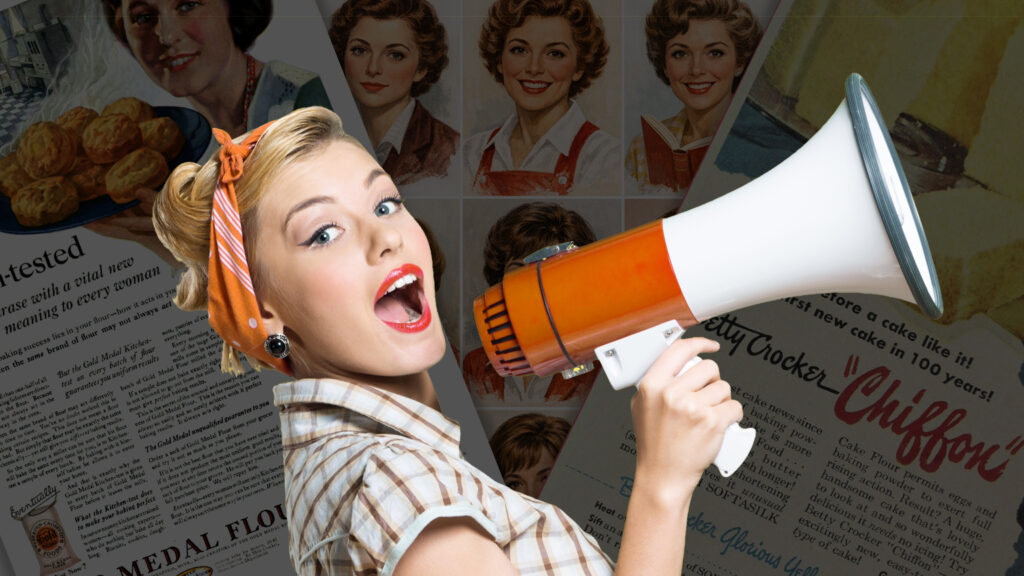
For a lot of Americans, that voice once had a name: Betty Crocker.
She wasn’t a real person (guess who learned that for the first time today?) but I would argue that she was real enough to matter. A steady presence in kitchens, on radios, and in print, Ms. Crocker showed up with recipes, advice, and an oddly contagious sense of confidence.
This is “marketing authority” in one of its earliest forms. Think about it: a recognizable voice, repeated consistently, offering something useful. (Trust will naturally follow).
And long before “personal brand” became a buzzword, women were shaping what brands would be known for: reliability, clarity, aspiration, warmth, credibility. Often behind the scenes, and often without credit.
This is a quick walk through that arc – from Betty Crocker to modern marketing leaders like Bozoma Saint John – and what their stories reveal about the things brands are still chasing today: trust and authority.
Authority Through the Ages
When we talk about “authority” in marketing, we’re talking about credibility: the proof, over time, that you are who you say you are.
Authority is what makes a buyer feel safe choosing you. It’s also what makes your claims feel believable.
And it’s not new.
Every era has had its own set of signals that helped people decide what was trustworthy. Those signals have changed with technology and culture, but the fundamentals have stayed surprisingly steady:
- Clarity: Do I understand what this is and why it matters?
- Consistency: Does it show up the same way over time, or does it keep changing?
- Proof: Is there anything behind the promise besides the promise?
The women we’re talking about here helped build those signals, sometimes as the voice, sometimes as the strategist, sometimes as the public leader. They shaped what “trusted” looks like.
The Early Blueprint: Betty Crocker and the Invention of “Trusted Brand Voice”
Before there were social feeds and brand accounts, there were brand voices.
Betty Crocker was one of the first examples of what happens when a brand shows up as a consistent, helpful presence. She became a recognizable voice and, more importantly, a point of view that felt like it didn’t have something to sell you, just something to teach you.
This is worth pausing on, because it’s a lesson modern brands keep relearning:
You don’t become trusted by being impressive. You become trusted by being understandable.
In B2B, we sometimes forget that. We can get so busy proving how sophisticated we are that we lose the one thing buyers need first: clarity.
The Betty Crocker era reminds us that when you achieve true authority, people don’t even realize they’re choosing you because they trust you. They just do.
The Visibility Era: Women Shaping Culture in Advertising (even when they weren’t the headline)
As advertising evolved and mass media accelerated, marketing became a bigger stage. Storytelling got sharper. Visual identity became more deliberate. “Brand” started to feel like something you could take a strategic approach to, building a cohesive “voice” and “image” from the ground up.
And women were there, in the work: the ideas, the language, the intuition about audience, and the emotional intelligence required to give marketing its empathetic edge.
This era matters because it introduced a tension we still live with today: while visibility can be faked and manufactured, authority simply can’t.
Trust is earned the hard way, by aligning what you say with what you do and showing consistency over time.
If you’re a marketing leader in a complex industry, you already know this. You feel it every time a competitor makes a big claim you can’t (and won’t) make yourself. You see it every time your own team wants a catchy line that won’t pass legal.
Modern Authority: Bozoma Saint John and Brand Leadership as Credibility
Fast forward to today, and authority looks different. The leadership behind it (and the culture inside it) give brands the ability to show up amidst major world changes and crowded, ever-shifting markets. In other words, authority is how modern brands survive.
Bozoma Saint John represents a 21st century model of marketing authority. Her work (an impressive career with titles like CMO of Endeavor, Chief Brand Officer of Uber, and Head of Global Consumer Marketing for Apple) embodies the thing many marketing leaders are still hungry for: a confident point of view that feels human, clear, and credible.
Modern authority often shows up like this:
- a brand that knows what it stands for
- messaging that sounds like a real person wrote it
- clarity + boldness
- and a sense that the people behind the brand mean what they say
For B2B brands, this level of alignment is a big deal. Why? B2B trust is earned slowly and lost quickly. Buyers are making higher-stakes decisions with more stakeholders, more scrutiny, and more risk.
What authority means now (especially in regulated and trust-heavy industries)
Today, authority has a new complication: your brand is being evaluated by systems and machines. Buyers are bypassing (no pun intended) Google entirely, getting search results and taking next steps based on results from LMMs such as ChatGPT. But what if your content is designed to show up in LLMs? What if those tricky machines don’t recognize your brand at all and are instead recommending your competitors?
This begs an even deeper question: what does “authority” actually look like now?
The 3 authority signals that never go out of style
- Clarity
Can a buyer understand what you do (quickly) and explain it to someone else without translating it? - Consistency
Do your pages, messages, teams, and channels all tell the same story? Or does your brand shape-shift depending on who wrote the copy? - Proof
Do you have credibility markers beyond your own claims?
Be Known for Something Specific
The women in this timeline helped shape what marketing authority looks like and how brands become trusted, chosen, and remembered.
Authority itself hasn’t changed much, though, and in a world where attention is cheap and AI is accelerating discovery, this is the part that really matters:
Being known for something specific.
Focus on what you do well (and who you’re best suited to do the work for), and you’re already in a clearer, more viable position to establish trust and credibility in your specific market.
Not sure where to start? If you’re working in a complex or trust-heavy industry and your message feels scattered, start here:
- Download the Marketing Guide for Highly Regulated Industries (free)
Or, if you’d rather talk it through: Talk to a Liger